
Le jour de la mort de Martin Amis.
Le jour de la mort de Martin Amis.
(Traduit en Anglais puis en Italien)
Vendredi 19 mai 2023.
Aujourd’hui, j’ai échappé aux sketches et aux catastrophes. C’était une belle journée de mai ensoleillée et printanière. Je devais rendre des bandes dessinées (Le Goulag de Dimitri, avec son antihéros, Eugène Krampon de Nogent-sur-Marne) à la bibliothèque. J’y suis allé en vélo, sachant qu’il est toujours dangereux de circuler à vélo dans Paris. Les voitures qui doublent, encore font attention, mais quand elles tournent… et après avoir peiné dans la montée rues de la Convention et de Vouillé, la tentation de se laisser griser dans la descente rues d’Alésia et de Tolbiac doit être tempérée : au feu, il y a les flics qui glandent mais qui veillent. Et je pensais que quand on n’aime pas une ville, qu’on n’aime pas les gens, on n’y peut rien. Mais où aimerais-je être alors ? En Italie, j’ai découvert aux informations qu’il y avait eu des inondations dévastatrices en Émilie-Romagne, avec le fleuve Savio débordant de son lit : le tourisme a ses limites. Il faudrait faire partie des bénévoles qui aident les populations, mais il y a déjà la protection civile, les pompiers. Il n’y a donc plus qu’à aimer son sort, et les efforts dérisoires et maladroits que je fournis. Cela a quand même été une belle balade, et le retour à pied ne manquait pas de charme par les boulevards Blanqui, Saint-Jacques, Raspail et Edgard Quinet, en passant devant la fondation Cartier. Mais quand je croise une bénévole, je suis obligé de l’éviter, je sais bien que la conversation anodine commençant par un « ça va ? » finira en me demandant de l’argent.
À la bibliothèque, j’ai même découvert des livres pour la jeunesse de la bibliothèque verte que je lisais quand j’étais enfant : les Langelot de Lieutenant X, et les Six compagnons de Paul-Jacques Bonzon. À mon époque, c’est-à-dire à la fin des années 1970-début des années 1980, c’était déjà vieux, c’étaient des séries qui dataient des années 1960. Ça me rappelle la bibliothèque de Noisy-le-Grand qui a évidemment aujourd’hui disparu. Elle était située entre l’impasse des Vergers (aujourd’hui rue des Vergers) où habitait ma nourrice et le C.E.S (collège d’enseignement secondaire, même si la distinction avec C.E.G. a officiellement disparu en 1975) du clos Saint-Vincent, qui était situé à l’est de l’impasse des Vergers (il a été reconstruit en 2002 sur un nouveau site, plus à l’ouest, au nord de la rue des Vergers. Adresse : 3 mail du Clos Saint-Vincent). Ce qui fait que je ne retrouve plus rien évidemment. Noisy a été construit ces 30 dernières années comme une banlieue à l’américaine, avec des quartiers et des immeubles résidentiels sortis de nulle part. Mais je me souviens de cette bibliothèque, à laquelle on accédait par un petit sentier piétonnier, entre la maison de ma nourrice, et celle de ses parents rue de la République. À moins que je ne sois induit en erreur : ce qui était le 4 impasse des Vergers est aujourd’hui situé approximativement au niveau du 24 rue des Vergers ; ce qui fait que le collège Saint-Vincent n’a pas été reconstruit très loin de l’emplacement initial ; et ce qui était un sentier dans la verdure est devenu le mail du clos Saint-Vincent ; je crois me rappeler que la bibliothèque était là ; aujourd’hui elle est intégrée à l’espace Michel Simon, c’est la médiathèque Georges Wolinski. Elle n’était pas très loin. Bref, c’est un cauchemar à se flinguer, la différence entre hier et aujourd’hui, et l’aspect architectural, même si c’est d’apparence inoffensif : froid et sans âme.
C’était donc dans cette bibliothèque que je lisais les aventures des Six Compagnons, des détectives amateurs, la bande du « Gros-Caillou », du nom de leur lieu de rendez-vous dans le quartier de la Croix-Rousse à Lyon ; et de Langelot, un orphelin devenu agent secret à 18 ans.
Voilà, c’est ce que m’inspire la redécouverte de ces volumes de la bibliothèque verte. C’est très léger, sachant que même ces livres pour la jeunesse sont des petits romans de plus de 150 pages, dans des collections de 40 à 50 volumes (un par année depuis la création environ).
Deux erreurs cependant : le rendez-vous avec la responsable de l’atelier d’écriture, je croyais que c’était par visio et à 14.30, c’était à 14.00 et au téléphone. Mais comment je fais pour me tromper tout le temps ? Et je suis obligé de dire que je suis satisfait des cours de l’École, parce que mon style est lourd et approximatif, et que les corrections apportées permettent de l’alléger, alors qu’en fait je ne vois pas comment je pourrais changer de style, et que je n’aime pas ces femmes. J’ai demandé comment on pourrait faire la description d’un voyage, en guise de réponse, elle m’a parlé de Dominique Fernandez. J’ai répondu que je le connaissais (les livres sur Saint-Pétersbourg, sur Naples), que c’est lui qui m’avait donné envie d’aller en Russie. Mais c’est un de ces écrivains qui ne me plaît guère parce que c’est un militant de la cause homosexuelle.
Et la réparation de la fuite des WC : j’ai forcé sur l’écrou du robinet d’arrivée d’eau alors qu’il suffisait de resserrer les vis qui maintiennent le réservoir sur le socle en émail. Heureusement que mon père m’a bien aidé sur ce coup-là et sur bien d’autres auparavant. Ce qui permettra de ne pas payer une facture exorbitante pour le plombier.
La promenade était quand même bien agréable par cette belle journée de mai. Certes, ce n’est pas le mai fiévreux de 1968, il y a quand même la contestation de la réforme des retraites (« C’est Darmanin qu’il faudrait dissoudre dans une baignoire d’acide… mais ce n’est pas le seul »), le rassemblement de Lutte Ouvrière dans le Val d’Oise, les coupes d’Europe…
Moi, la révolution que je préfère, c’est la révolution copernicienne. Une révolution qui ne fait pas de bruit, comme moi, et pourtant elle tourne. Les gens ne s’en rendent pas compte mais sans faire d’éclats, la Terre ne cesse de tourner. Elle tourne autour du soleil, elle tourne sur elle-même, dans une galaxie en expansion continue. Mais qu’y a-t-il de l’autre côté ? Si on parle de galaxie, c’est qu’il y a un extérieur à cette galaxie et donc une membrane, une frontière. Les grands écrivains, les scientifiques n'aiment pas les songe-creux qui se réfugient dans une métaphysique fumeuse mais ils n’expliquent pas tout non plus. Hors de notre galaxie, il y a d’autres galaxies. Mais comment fait-on la différence ?
Et d’abord comment se fait-il que l’atome ressemble à un système solaire en miniature avec des électrons qui tournent autour du noyau comme les planètes autour du soleil ?
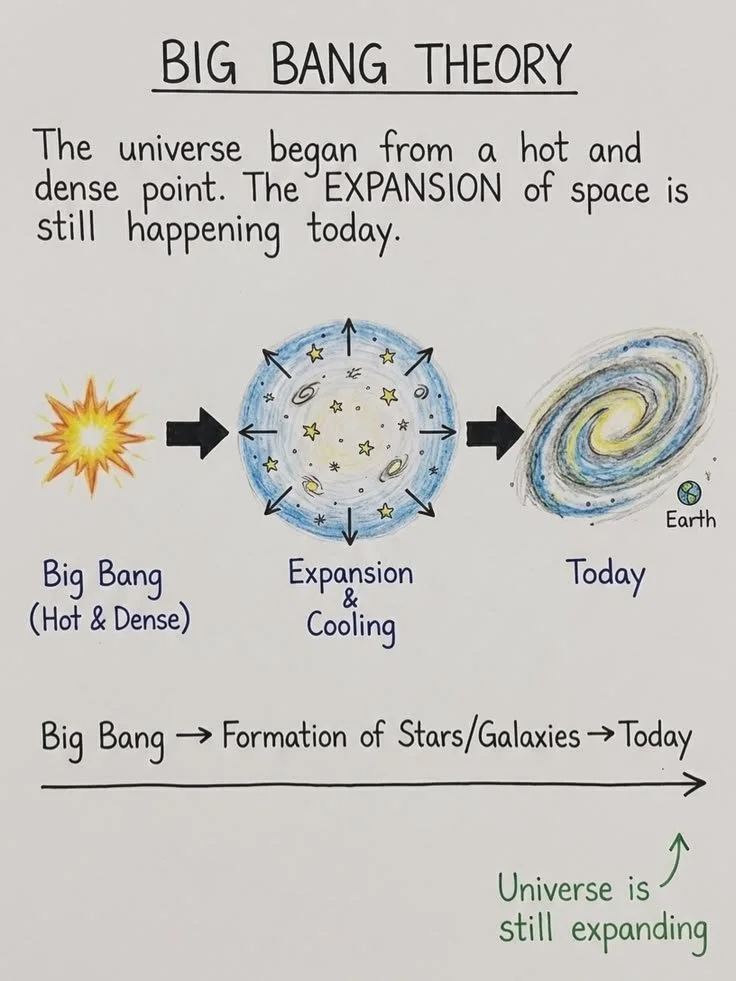
Comment se fait-il que l’univers que nous connaissons soit issu d’une explosion d’énergie qui se transforme en matière qui tenait dans un dé à coudre (ce qui me fait penser à cette citation de Shakespeare, tirée de Hamlet : « Je pourrais être enfermé dans une coquille de noix (« in a nutshell ») et me sentir comme le roi d’un espace infini. ») ? C’était il y a 20 milliards d’années, d’après la théorie du Big Bang. Température : plusieurs milliards de milliards de milliards de degrés ; une infime fraction de secondes après le Big Bang, l’univers se refroidit et se dilate ; des particules élémentaires vont constituer la matière : les quarks. La température chute de plusieurs milliards de degrés par milliardièmes de seconde. Un millionième de seconde après le Big-Bang, les premières « briques » de matière apparaissent ; un peu plus tard, deux protons et deux neutrons s’unissent : le premier noyau atomique vient d’apparaître, il s’agit d’un noyau d’hélium ; la température n’est plus que de 3 millions de degrés. Une minute après le Big-Bang : la chute vertigineuse de la densité permet à des électrons de tourner librement autour des noyaux atomiques. Les premiers atomes d’hydrogène, puis d’hélium se forment. Ces atomes resteront les plus abondants dans l’Univers : l’hydrogène et l’hélium représentent 99 % de sa matière. Après ces 5 premières minutes, l’univers s’étend et se refroidit plus lentement : c’est l’ère de la matière. En 1 million d’années, la température tombe à 3000 degrés. Ces conditions permettent la naissance des étoiles.
Les premiers atomes : pour former des atomes, il faut que des noyaux et des électrons s’unissent. Si un noyau à un seul proton s’unit à un électron, on obtient l’atome le plus simple, celui d’hydrogène. Si un noyau, composé d’un proton et d’un électron, on obtient un atome d’hydrogène lourd. Si un électron rejoint un noyau à deux neutrons et un proton, il donne un atome de tritium. L’atome d’hélium est obtenu lorsque deux électrons s’unissent à un noyau à deux neutrons et deux protons. L’atome le plus compliqué né durant l’ère de la matière est celui de lithium, trois électrons y sont associés à trois protons et deux neutrons.
500 000 ans après le Big-Bang, l’hydrogène et l’hélium se regroupent en grumeaux géants.
500 000 ans passent encore : les étoiles se condensent au cœur de ces grumeaux et se regroupent en amas.
3 milliards d’années plus tard, les amas d’étoiles fusionnent pour donner des proto-galaxies qui, sous l’effet de la gravitation, deviendront les galaxies que nous connaissons.
The day Martin Amis died.
Friday, May 19, 2023.
Today, I managed to avoid any farcical mishaps or disasters. It was a beautiful, sunny spring day in May. I had to return some comic books — Dimitri’s *Le Goulag*, featuring his anti-hero Eugène Krampon from Nogent-sur-Marne — to the library. I went by bike, well aware that cycling in Paris is always dangerous. Cars overtaking you might still be careful, but when they turn... and after struggling up the incline of Rue de la Convention and Rue de Vouillé, the temptation to get carried away on the downhill stretch of Rue d’Alésia and Rue de Tolbiac has to be tempered : at the traffic lights, the cops are lounging about, yet keeping a watchful eye. I found myself thinking that when you don’t like a city, or the people in it, there’s nothing to be done about it. But where would I rather be ? I learned from the news that devastating floods had hit Emilia-Romagna in Italy, with the Savio River bursting its banks; tourism has its limits. One ought to be among the volunteers helping the local population, but the Civil Protection and the fire department are already on the job. So, all that’s left is to accept one’s lot — and the puny, clumsy efforts I make. It was a lovely ride, nonetheless, and the walk back held its own charm, taking me along the Blanqui, Saint-Jacques, Raspail, and Edgar Quinet boulevards and past the Cartier Foundation. Yet whenever I cross paths with a volunteer, I feel compelled to steer clear; I know full well that any casual conversation starting with " How are you ? " will inevitably end with a request for money.
At the library, I even discovered children’s books from the ‘Bibliothèque Verte’ series that I used to read as a child — Lieutenant X’s Langelot and Paul-Jacques Bonzon’s Les Six Compagnons. Even back in my days — the late 1970s and early 1980s — these were already old-fashioned; they were series that dated back to the 1960s. It reminds me of the Noisy-le-Grand library, which has, of course, since disappeared. It was located between Impasse des Vergers (now Rue des Vergers), where my childminder lived, and the Clos Saint-Vincent C.E.S. (a type of secondary school — though the distinction from the C.E.G. had officially vanished in 1975), which lay to the east of Impasse des Vergers (it was rebuilt in 2002 on a new site further west, north of Rue des Vergers; address : 3 Mail du Clos Saint-Vincent). Naturally, this means I can’t find anything there anymore. Over the last thirty years, Noisy has been built up like an American-style suburb, with neighborhoods and residential blocks springing up out of nowhere. But I remember that library; you reached it via a small footpath running between my childminder’s house and her parents’ home on Rue de la République. Unless I’m making a mistake : the property at 4 Impasse des Vergers is now roughly where 24 Rue des Vergers stands, meaning the Saint-Vincent school wasn’t rebuilt very far from its original location, and what used to be a path through the greenery has become the Mail du Clos Saint-Vincent. I seem to recall the library being right there; today, it’s part of the Espace Michel Simon complex as the Georges Wolinski media library. It wasn’t very far away. In short, the difference between yesterday and today is a total nightmare — especially the architectural aspect, which, despite appearing innocuous, is cold and soulless.
It was in this library, then, that I used to read the adventures of the Six Compagnons — amateur detectives known as the « Gros-Caillou » gang, named after their meeting spot in Lyon’s Croix-Rousse district — and of Langelot, an orphan who became a secret agent at eighteen.
That is what rediscovering these ‘Bibliothèque Verte’ volumes brings to my mind. It’s all very light reading — though even these children’s books are actual novels of over 150 pages, part of series spanning 40 to 50 volumes (roughly one per year since their inception).
Two slip-ups, though : I had an appointment with a writing workshop employee — I thought it was a video call at 2:30 PM, but it turned out to be a phone call at 2:00 PM. How do I manage to get things wrong all the time ? And I feel compelled to say I’m satisfied with the School’s classes — since my writing style is clunky and imprecise, and the corrections help lighten it up — even though, in reality, I don’t see how I could change my style, for I don’t like these women, and above all, the advice they give me. I asked how one might go about describing a journey; in response, she spoke to me about Dominique Fernandez. I replied that I knew his work (the books on St. Petersburg and Naples for example) and that he was one of these who gave me the envy to visit Russia. Yet he is one of those writers I don’t like very much, because he is an activist for the gay rights cause – poor reason : he’s not the more vehement, and his convictions do not interfere and do not prevent to enjoy the reading.
Later, I had to fix the toilet leak : I forced the nut on the water inlet valve when all I really needed to do was tighten the screws holding the tank to the enamel base. Luckily, my father really helped me out with that one — just as he has with so many other things in the past. It saved me from paying an exorbitant plumber’s bill.
The walk was pleasant enough on such a beautiful May day. Admittedly, it’s not the feverish May of 1968, though there is still the protest against pension reform ("It’s Darmanin who ought to be dissolved in a bathtub of acid... though he’s not the only one"), the Lutte Ouvrière rally in Val-d’Oise, the European cup matches...
As for me, the revolution I prefer is the Copernican one. A revolution that makes no noise — very much like me — and yet, it turns. People don’t realize it, but without making a fuss, the Earth keeps on turning. It orbits the sun and spins on its own axis, all within a continuously expanding universe. But what lies on the other side ? If we speak of a galaxy, it implies there is something outside that galaxy — on the other side of a membrane, a boundary, a frontier… But for the universe ? I still have, as I always have had, difficulties to represent myself what means a universe in expansion. Great writers and scientists dislike the daydreamers who retreat into hazy metaphysics, yet they don’t explain everything either. Beyond our galaxy, there are other galaxies. And beyons the universe ? But how do we tell the difference ?
And for that matter, how is it that an atom resembles a miniature solar system, with electrons orbiting the nucleus just as planets orbit the sun ? How did the universe we know originate from an explosion of energy — transforming into matter — that was once contained within a thimble (a fact that always reminds me of the Shakespeare quote from Hamlet : « I could be bounded in a nutshell and count myself a king of infinite space »)? According to the Big Bang theory, this happened 20 billion years ago. The temperature was billions upon billions of degrees; a tiny fraction of a second after the Big Bang, the universe cooled and expanded, and elementary particles — quarks — began to form matter. The temperature plummeted by billions of degrees every billionth of a second. One millionth of a second after the Big Bang, the first "building blocks" of matter appeared; shortly thereafter, two protons and two neutrons combined to form the first atomic nucleus — a helium nucleus — while the temperature dropped to 3 million degrees. One minute after the Big Bang, a dizzying drop in density allowed electrons to orbit freely around atomic nuclei. The first hydrogen atoms formed, followed by helium atoms. These atoms would remain the most abundant in the universe : hydrogen and helium account for 99% of its matter. After these first five minutes, the universe expanded and cooled more slowly, marking the era of matter. Over the course of a million years, the temperature fell to 3,000 degrees. These conditions paved the way for the birth of stars.
The first atoms : forming atoms requires the union of nuclei and electrons. If a nucleus with a single proton combines with an electron, the simplest atom — hydrogen — is created. If a nucleus combines with an electron, a heavy hydrogen atom is formed. If an electron joins a nucleus consisting of two neutrons and one proton, it forms a tritium atom. A helium atom is created when two electrons combine with a nucleus made of two neutrons and two protons. The most complex atom to emerge during the era of matter is lithium, in which three electrons are associated with three protons and two neutrons.
500,000 years after the Big Bang, hydrogen and helium clump together into giant masses.
Another 500,000 years pass : stars condense within the cores of these masses and gather into clusters.
Three billion years later, these star clusters merge to form proto-galaxies which, under the influence of gravity, will evolve into the galaxies we know today.
Il giorno in cui morì Martin Amis.
Venerdì 19 maggio 2023.
Oggi sono sfuggito agli schizzi e alle catastrofi. Era una bellissima giornata di maggio, soleggiata e primaverile. Dovevo restituire in biblioteca alcuni fumetti (Il Gulag di Dimitri, con il suo antieroe, Eugène Krampon di Nogent-sur-Marne). Ci sono andato in bicicletta, sapendo che pedalare a Parigi è sempre pericoloso. Le auto che sorpassano, almeno, sono prudenti, ma quando svoltano... e dopo aver faticato su per Rue de la Convention e Rue de Vouillé, bisogna resistere alla tentazione di lasciarsi trasportare nella discesa di Rue d'Alésia e Rue de Tolbiac : ai semafori ci sono poliziotti in attesa, che vigilano. E ho pensato che quando una città non ti piace, quando la gente non ti piace, non c'è niente che tu possa fare. Ma dove vorrei essere allora ? In Italia, ho appreso dal telegiornale delle devastanti alluvioni in Emilia-Romagna, con il fiume Savio esondato : il turismo ha i suoi limiti. Dovrei essere una dei volontari ad aiutare la popolazione, ma ci sono già la Protezione Civile e i vigili del fuoco. Quindi non mi resta che accettare la mia sorte e i miseri e goffi sforzi che sto compiendo. È stata comunque una bella passeggiata, e il ritorno lungo i Boulevard Blanqui, Saint-Jacques, Raspail ed Edgard Quinet è stato piuttosto piacevole, passando davanti alla Fondazione Cartier. Ma quando incrocio una volontaria, devo evitarla; so benissimo che l'innocua conversazione che inizia con un "Come stai ?" finirà con una richiesta di denaro.
In biblioteca, ho persino riscoperto libri per bambini della collana ‘Bibliothèque Verte’ che leggevo da piccolo bambino : la serie di Langelot del Tenente X e I Sei Compagni di Paul-Jacques Bonzon. Ai miei tempi, cioè tra la fine degli anni '70 e l'inizio degli anni '80, erano già fuori di moda; si trattava di serie che risalivano agli anni '60. Mi ricorda la biblioteca di Noisy-le-Grand, che ovviamente ora non esiste più. Si trovava tra l'Impasse des Vergers (ora Rue des Vergers), dove viveva la mia balia, e il C.E.S. (« Collège d’enseignement secondaire », anche se la distinzione con il C.E.G. è ufficialmente scomparsa nel 1975) di Clos Saint-Vincent, che si trovava a est dell'Impasse des Vergers (è stato ricostruito nel 2002 in una nuova sede, più a ovest, a nord di Rue des Vergers. Indirizzo : 3 Mail du Clos Saint-Vincent). Di conseguenza, ovviamente, non riesco più a trovare nulla. Noisy si è sviluppata negli ultimi 30 anni come un sobborgo americano, con quartieri e palazzi che spuntano dal nulla. Ricordo bene quella biblioteca, a cui si accedeva tramite un piccolo sentiero, tra la casa della mia balia e quella dei suoi genitori in Rue de la République. Se non sbaglio : quello che una volta era il numero 4 di Impasse des Vergers ora si trova all'incirca al numero 24 di Rue des Vergers; il che significa che la scuola Saint-Vincent non è stata ricostruita molto lontano dalla sua posizione originale; e quello che un tempo era un sentiero nel verde è diventato il chiostro di Saint-Vincent; mi sembra di ricordare che la biblioteca fosse lì; oggi fa parte del complesso Michel Simon, è la mediateca Georges Wolinski. Non era molto distante. Insomma, è un incubo, la differenza tra allora e ora, e l'architettura, anche se sembra innocua : fredda e senz'anima.
Fu in quella biblioteca che leggevo le avventure dei Sei Compagni, investigatori dilettanti, la banda del "Gros-Caillou", chiamata così per il loro luogo di ritrovo nel quartiere Croix-Rousse di Lione; e Langelot, un orfano che a 18 anni diventa un agente segreto.
Questo è ciò che mi ispira la riscoperta di questi volumi della collana Bibliothèque Verte. È una lettura molto leggera, considerando che anche questi libri per ragazzi sono romanzi brevi di oltre 150 pagine, in collane di 40-50 volumi (circa uno all'anno, dalla loro nascita).
Due errori, però : l'incontro con la responsabile della bottegha di scrittura – pensavo fosse in videoconferenza e alle 14:30, invece era alle 14:00 e per telefono. Come faccio a sbagliarmi sempre ? E devo dire che sono soddisfatta dei corsi della scuola, perché il mio stile è pesante e impreciso, e le correzioni che mi hanno fatto mi aiutano ad alleggerirlo, mentre in realtà non vedo come potrei cambiarlo, perché queste donne non mi piacciono, e ancora meno i loro consigli. Ho chiesto come si potesse descrivere un viaggio e, in risposta, lei ha menzionato Dominique Fernandez. Ho risposto che lo conoscevo (i suoi libri su San Pietroburgo o su Napoli ad esempio), che fu uno di quelli che mi hanno dato il desiderio di andare in Russia. Ma è uno scrittore che non mi piace tanto perché è un attivista per i diritti dei gay – povera ragione : le sue convinzione non mi hanno mai impedito di godere la lettura dei suoi libri.
Più tardi, ho dovuto affrontare la riparazione della perdita del water : ho stretto troppo il dado della valvola di ingresso dell'acqua quando avrei dovuto semplicemente stringere le viti che fissano la cassetta alla base smaltata. Per fortuna, mio padre mi è stato di grande aiuto in quell'occasione, e in molte altre precedenti. Questo mi risparmierà una salatissima fattura dell'idraulico.
La passeggiata era comunque piacevole in questa splendida giornata di maggio. Certo, non è il maggio febbrile del 1968, ma ci sono ancora le proteste contro la riforma delle pensioni ("È Darmanin che dovrebbe essere sciolto in una vasca di acido... ma non solo lui"), la manifestazione di Lutte Ouvrière nella Val d'Oise, le partite di coppe europee...
Personalmente, la rivoluzione che preferisco è la rivoluzione copernicana. Una rivoluzione silenziosa, come me, eppure in atto. La gente non se ne rende conto, ma senza clamore, la Terra non smette mai di girare. Ruota attorno al sole, gira sul proprio asse, all'interno di un universo in continua espansione. Ma cosa c'è oltre ? Se parliamo di galassia, è perché ha un esterno, e quindi una membrana, un confine... Ma per l’universo ? Ho sempre avuto molto difficultà a capire che cosa significa un universo in expansione. I grandi scrittori e scienziati non amano i sognatori che si rifugiano in nebulose metafisiche, ma loro non spiegano tutto. Oltre la nostra galassia, ci sono altre galassie. Ma come le distinguiamo ? E oltre l’universo ? Che cosa significa un universo che occupa tutto lo spazio disponibile e, purtroppo, che è in espansione ?
E prima di tutto, com'è possibile che l'atomo assomigli a un sistema solare in miniatura, con gli elettroni che orbitano attorno al nucleo come pianeti attorno al sole ?
Com'è possibile che l'universo che conosciamo abbia avuto origine da un'esplosione di energia che si è trasformata in materia che potrebbe stare in un ditale (il che mi ricorda quella citazione dell'Amleto di Shakespeare : « Potrei essere in un guscio di noce e sentirmi il re di uno spazio infinito ») ? Questo accadde 20 miliardi di anni fa, secondo la teoria del Big Bang. Temperatura : diversi miliardi di miliardi di miliardi di gradi; Una frazione infinitesimale di secondo dopo il Big Bang, l'universo si raffreddò e si espanse; le particelle elementari formarono la materia : i quark. La temperatura diminuì di diversi miliardi di gradi per miliardesimo di secondo. Un milionesimo di secondo dopo il Big Bang, comparvero i primi "mattoni" della materia; poco dopo, due protoni e due neutroni si combinarono : era appena apparso il primo nucleo atomico, un nucleo di elio; la temperatura era ora di soli 3 milioni di gradi. Un minuto dopo il Big Bang : il drastico calo di densità permise agli elettroni di orbitare liberamente attorno ai nuclei atomici. Si formarono i primi atomi di idrogeno, poi gli atomi di elio. Questi atomi rimarranno i più abbondanti nell'Universo : idrogeno ed elio rappresentano il 99 % della sua materia. Dopo questi primi 5 minuti, l'universo si espande e si raffredda più lentamente : questa è l'era della materia. In un milione di anni, la temperatura scende a 3000 gradi Celsius. Queste condizioni permisero la nascita delle stelle.
I primi atomi : per formare gli atomi, nuclei ed elettroni devono combinarsi. Se un nucleo con un solo protone si combina con un elettrone, si forma l'atomo più semplice : l'idrogeno. Se un nucleo, composto da un protone e un elettrone, forma un atomo di idrogeno pesante. Se un elettrone si unisce a un nucleo con due neutroni e un protone, si forma un atomo di trizio. L'atomo di elio si forma quando due elettroni si combinano con un nucleo contenente due neutroni e due protoni. L'atomo più complesso creato durante l'era della materia è il litio, che è costituito da tre elettroni legati a tre protoni e due neutroni.
500.000 anni dopo il Big Bang, idrogeno ed elio si sono aggregati formando nuclei giganti.
Altri 500.000 anni dopo, le stelle si sono condensate all'interno di questi nuclei formando ammassi.
3 miliardi di anni dopo, questi ammassi stellari si sono fusi per formare protogalassie che, sotto l'influenza della gravità, sarebbero diventate le galassie che conosciamo oggi.
Vendredi 4 septembre 2026 / Venerdì 4 settembre 2026 / Friday, September 4, 2026.
